Educate and Protect the Young (Part 1)
Posted: June 16, 2017 Filed under: Care for the Caregiver, Healthcare Innovation, Medical Education, Patient Safety Leave a comment Last week was the first of three annual Patient Safety Summer Camps for graduate resident physicians in 2017. Each year, I learn from the resident scholars who attend about the current safety challenges and barriers they face on a daily basis as they try to both deliver safe care to patients, and learn to become good physicians. Over the last few years, however, I have noticed a growing concern among our Telluride Scholars, a theme that centers on the overall well being of resident physicians in the healthcare workplace.
Discussions around resident well being reached an all-time turning point this past week during an interactive presentation on Care for the Caregiver programs led by Crystal Morales from MedStar Health. During the presentation, Crystal asked the residents to think back and remember the first patient death they experienced—not from a medical error, necessarily, but just the first patient they cared for who died. She asked them to focus on how they felt versus the details of the case, and then inquired if anyone was willing to share their story with the group.
A first brave resident raised her hand. Before she could finish her story, she broke down in tears yet she continued to talk about how that patient’s death affected her still to that day. A second hand was raised and then a third…it was like someone opened an emotional faucet. Each story shared seemed to be both validation and acknowledgment that the pain in serving witness to such loss deserved, and needed, to be honored. The sharing of these stories seemed cathartic; helping ease the pain this group collectively had been holding on to for far too long. Many in the room described Telluride as a “safe place” where they felt comfortable sharing these feelings, and their stories. Portions of their reflective posts on our Telluride Summer Camp blog are shared below. I encourage all of you to visit the Telluride blog and read their stories in their entirety.
- “The afternoon of day 3 left many of us in tears as we went through our stories of first deaths and tragic patient outcomes. It was clear, as these stories came out that many of us were still hanging on to these painful memories and will probably do so for the remainder of our careers. Another common thread in these stories was the lack of support after these unforgettable events happened. In healthcare, we are expected to take a deep breath and move on with our days as if nothing ever happened. Take another history, make another diagnosis, and speak to another family, all while making sure we check our emotions at the door”.
- “Yesterday during one of our group discussions, people went around the room discussing the first time they were involved in the death of a patient. The different stories told were poignant and extremely emotional. Some of these stories were quite recent while others happened years ago. The unifying trait in all of the stories was the raw emotion and pain in the voices of the speaker. Every story told ended the same way… “and then I just went back to work.” Years later it is entirely evident that these wonderful caring people are still hurting. As a profession we are failing. We are eating our young with the perverse attitude that it will build a thick skin and make you a better doctor. We are not robots.”
- “Why is this happening? We, the physicians, need to speak up. We need to consider how talking about our own reactions to and reflections of patient care events is indeed a critical piece of patient-centric care. Today, we finally had a chance to let it out, to vent our frustrations, to discuss our feelings of self-blame and near self-collapse. These stories are so important because we have to let each other know, YOU ARE NOT ALONE.”
- “If we are unable to care for ourselves, we won’t be able to provide the best care to our patients and their families. The tremendous support ‘care for the caregiver’ provides is amazing and has inspired me to investigate the options my institution can provide.”
- We discussed how good it felt today to open up about the loss of our patients and the support (or lack of) we get in these moments. So many times we just need to talk it out, feel heard, and feel validated. These conversations are cleansing and necessary.”
- “Today, we talked about care for the caregiver. After all, there is no other workplace like the hospital in terms of sacrifice, acuity, and risk of burnout. With such high stakes, healthcare providers are subject to exorbitant levels of stress that perhaps defy human physical, mental, and emotional capacity.”
The Journey by Anne Gunderson PhD
Posted: June 15, 2017 Filed under: Leadership, Medical Education, Patient Safety Leave a commentIn its 1999 report, To Err is Human: Building a Safer Health System, the Institute of Medicine (IOM) concluded that medical errors, particularly hospital-acquired conditions, may be responsible for as many as 98,000 deaths annually, at costs of up to $29 billion. Suddenly, quality healthcare and patient safety became central, public concerns in the United States. According to the Institute of Medicine (IOM; 2000), medical errors accounted for between 48,000 and 98,000 deaths annually in the U.S. At that time, medical errors were considered the eighth leading cause of death in the U.S.; more prevalent than deaths from breast cancer, AIDS, or motor vehicle accidents.
I started my practice in medical education in 2000 at Southern Illinois University College of Medicine. At that time we were creating a new and robust, medical curriculum. Similarly to other medical schools, however, we had just a few lectures in this content area. By 2003, quality and safety had become central concerns in the U.S. Communication failures were identified as the root cause of the majority of both malpractice claims and major patient safety violations, including errors resulting in patient death. The Joint Commission found that communication breakdowns were the root cause of 60% of medical errors, 75% of which resulted in death. 2,034 errors, which means 915 people died as a result of a communication error in 2003. Clearly it was time to get serious.
It was 2005 when I joined the University of Illinois Chicago College of Medicine faculty in the medical education department. I had the opportunity to engage with faculty members seriously interested in training learners in patient safety. For two years, I worked with this team to create and deliver lectures and simulations, co-lead a patient safety elective, and was invited to attend the Telluride Experience.
In early 2007, we were in the middle of creating a patient safety institute to deliver a formal curriculum on the subject. One of my goals was to create an online, degree-granting patient safety leadership program. 6 months later, the Master of Science in Patient Safety Leadership (PSL) proposal was created. Once it had been approved by the various required entities, the curriculum was created by our team of patient safety experts. In fall 2008, the first cohort of learners began; however, this was only the beginning. The PSL program was very successful and applications were rolling in. The learners couldn’t get enough learning and we were getting rave reviews. Despite the program’s success, however, I found a letter from the Senior Dean for Medical Education that said they no longer needed my services.
So the journey continued… Thankfully, I had received opportunities from other medical schools. As the Associate Dean for Medical Education at the University of Cincinnati College of Medicine (UC), I had the opportunity to work with an amazing faculty and a very talented Senior Dean for Medical Education, Andrew Filak. Within 20 months, we created a new, contemporary, four-year medical school curriculum, which was awarded full accreditation from the Liaison Committee on Medical Education. . During these very busy years, we created an Institute for Healthcare Improvement (IHI) Open school and embedded safety, quality, and leadership into the curriculum. With other deans from nursing and pharmacy we implemented interprofessional sessions for medicine, nursing, and pharmacy learners. Each year, I also attended the Telluride Experience as a faculty member and continued to bring learners from UC to the events. One day, I picked up the phone and everything changed again.
It’s 2013 and the original PSL team is back together again; this time in Baltimore, MD and the District of Columbia. Despite 14 years of experience in medical education, I was amazed by how little quality and safety training was provided in medical and nursing schools nationwide. Basic training is required by accreditation bodies, but it does not adequately prepare the physicians and nurses for the complexity of medicine in today’s world. While some positive changes have occurred, we are still battling the same issues.
A little over a decade later, medical errors are now the third leading cause of death and account for more than 400,000 deaths per year. Recent studies have reported that as many as one-third of hospitalized patients may experience harm or an adverse event, often from preventable errors. Unfortunately, competencies for optimal patient care outcomes in the clinical environment include knowledge, skills, and attitudes in critical disciplines not traditionally trained in medical or other health science programs. Frankly, it’s hard to imagine that one can provide ‘care of the entire person’ if attention to quality care and patient safety is missing.
The absence of such training leads to medical errors – a serious problem that affects not just patients but also the health care workers involved. Many good physicians, nurses, pharmacists and other health care professionals have left the field due to depression and lack of support from their colleagues. Even more unfortunate, a growing number of health care professionals take their own lives each year when involved in a preventable medical error.
It’s 2017 and we have created a solution to this pervasive crisis. I worked with Georgetown University and MedStar Health to create a new Executive Master’s Degree in Clinical Quality, Safety and Leadership (CQSL).
CQSL unleashes a systematic, evidence-based education that will achieve striking results in safety, quality, reliability, and healthcare value. With a learner-focused environment the CQSL program will equip learners to become leaders in the advancement of safety science and quality healthcare. The curriculum includes online asynchronous coursework, simulation, team training, and one onsite residency. The inaugural class begins in fall 2017.
Health-care practitioners and leaders need new skills and attitudes to meet the changing needs of patients in a medical environment that has complex multilayered systems, informatics, assessment, outcomes, and quality indicators. Secondary to these changes, health care has become a high-risk industry. As Yukl (2002) noted, “A vision is seldom created in a single moment of revelation, but instead it takes shape during a lengthy process of exploration, discussion, and refinement of ideas”.
And so the Journey continues…
Academy for Emerging Leaders in Patient Safety Kicks Off in US for 2017
Posted: June 5, 2017 Filed under: Medical Education, Nursing Education, Patient Safety | Tags: Academy for Emerging Leaders in Patient Safety, David Mayer MD, Medical Education, MedStar Health, Nursing education, Telluride Patient Safety Summer Camp Leave a comment As many of us begin our regular summer pilgrimage to Telluride, Colorado, it is hard to believe that thirteen years have passed since a small group of passionate healthcare leaders came together in Telluride to design a comprehensive patient safety curriculum for future healthcare leaders. As a result of that work, many wonderful and highly committed patient advocates and safety leaders will once again convene in Telluride the next two weeks to continue our mission of Educating the Young. For those not from Colorado, summertime in Telluride may be one of the best kept secrets in the United States. Be it the old west feel of the town, or the hypoxic “magic” that happens at an elevation of 9,500 feet, Telluride has always been an educational mecca for everyone that joins us during these memorable weeks of high altitude learning led by the MedStar Institute for Quality and Safety and the Academy for Emerging Leaders in Patient Safety (AELPS).
Over the past thirteen years, about 1,000 students and resident physicians from across the world have attended one of our AELPS Telluride Experience workshops. Many of our past alumni have gone on to lead work that has inspired real change at their home institutions–change that is helping make care safer and more transparent. We look forward to meeting yet another class of emerging patient safety leaders these two weeks who will also stand up for patients, transparency and a true culture of safety during their careers.
Through the generous support of The Doctors Company Foundation (TDCF), Committee of Interns and Residents (CIR), COPIC and MedStar Health, about 180 health science students and resident physician leaders will be attending one of four, week-long Patient Safety Summer Camps being held in the United States this summer. The US camps are held each year in Telluride CO, Baltimore MD, and Napa CA. In addition, another 100 future healthcare leaders will be attending one of our AELPS International Patient Safety Summer Camps this year in Sydney, Australia and Doha, Qatar.
A new generation of caregivers – young physicians, nurses, pharmacists and other allied health professionals – are stepping up and starting to make a difference in healthcare. Many of them understand and appreciate they will soon be the gatekeepers for safe, high quality, high value patient care. They are taking this responsibility seriously – more seriously than I and my colleagues did when we were their age. These young leaders are the future of healthcare…and the future is bright.
We hope you will follow our activities and learnings through our student, resident and faculty blogs, found here on ETY or The Telluride Blog, found here. Please comment and join our conversation on the blogs or on Twitter (@TPSSC and #AELPS13).
A Better Way to Manage Medical Errors
Posted: May 11, 2017 Filed under: Medical Error | Tags: Harm events, Medical Error, Medical Malpractice Leave a commentMany of us in healthcare know medical errors are the third leading cause of death in the United States.
We are also aware that healthcare is a high-risk industry. But unlike other high risk-industries however, such as aviation and nuclear energy, healthcare has been too slow to adopt tools, techniques and behaviors proven to lower risk to patients. As a result, errors made by well-intentioned caregivers continue to cause unintentional harm and even death to patients.
In my last ETY blog post, I shared a medical error I was involved in that led to patient harm. I also shared how we hid that error from the patient, as well as other caregivers who worked in our hospital. It is said healthcare “buries” our medical mistakes. Fear of malpractice claims, fear of losing our license, fear of admitting we are fallible and can make a mistake; doctors are expected to be perfect, and this behavior is an unintended consequence of those unrealistic expectations. These are just a few of the reasons caregivers and hospital leaders try to hide or even downright lie when medical errors cause patient harm.
This approach, known as “deny and defend”, is a common legal and malpractice insurance strategy, not only in healthcare but in other insurance-based industries. Not only is “deny and defend” morally and ethically wrong, but in healthcare it also keeps us from learning and improving our care systems when these very unfortunate events occur. If we don’t openly talk about, and learn from our mistakes, we will never fix healthcare so that future patients don’t suffer similar harm. In our wrong-sided surgery error, no one wanted to discuss how we could have prevented that harm from happening again. All we wanted to do was bury it, hoping no one found out. And then what happened? Wrong-sided surgeries continued to occur over and over again for years afterwards.
Historically, the role of hospital risk managers has been to protect the hospital at all cost, even if it meant lying to patients and families. Refusing to answer questions, denying patients access to their medical records, not returning phone calls, or referring patients to hospital lawyers has been routine practice for many health systems. Many patients and families wait years to have their calls returned, and still fail to receive truthful answers on what really happened when there is a conversation. As many plaintiff attorneys have shared through the years, “There’s a lot of lying going on out there”. The only option patients and families often have to get their questions answered, is to hire their own lawyer and file a lawsuit against the hospital and the physician. Once both sides “lawyer up”, the only thing that matters is to win the lawsuit, regardless of the financial cost or additional suffering incurred by all stakeholders. No one wins in a medical malpractice trial.
Fortunately, some courageous health systems, hospitals and medical malpractice carriers are discovering there is a better way…
“Yes, Today is Your Lucky Day”
Posted: May 7, 2017 Filed under: Medical Education, Medical Error, Patient Safety, Storytelling Leave a comment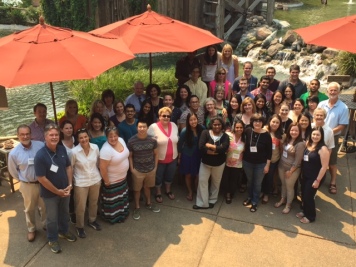 As we at the Academy for Emerging Leaders in Patient Safety (AELPS) prepare for our 13th year of Patient Safety Summer Camps for future healthcare leaders, I always reflect on a personal story I share the first day of each session to kick-off our week of work together. The story captures many of the reasons we have a preventable medical harm crisis today, such as: fear, devastation, lack of transparency, refusing to learn and improve from mistakes, lack of embedded human factors. The story also serves to show our young learners that we all are human and we all make mistakes, and helps set up a learning environment where they feel safe in sharing their own personal stories. Those who have only worked in healthcare a short time will have seen, or been involved in, an event that harmed a patient. For those that have followed our blog through the years, you have read some of these personal stories…mistakes that even harmed our own family members. I thought I would share my story with all of you.
Many years ago, I was involved in a medical error as a resident – a wrong-sided hernia repair that unfortunately harmed one of our patients. As the anesthesiologist, my job was to bring the patient into the operating room, put the required monitors on so I could make sure he was safe during the procedure, and then administer the general anesthetic that would keep him unconscious during his right-sided hernia surgery. I did that successfully and was focused on my job but, like others in the operating room, I didn’t notice that the senior surgical resident had taken the scalpel and made the surgical incision on the patient’s left side by mistake. Two minutes later the attending surgeon who had been detained with a question from another surgeon, came into the operating room, looked at the patient on the operating table and asked, “I thought this was a right-side hernia repair?” When the surgical resident realized her mistake, she passed out…the impact making a medical error can have on us as caregivers.
The surgeon closed the incision on the left side and then proceeded to fix the hernia on the right side. The patient now had two surgical bandages on their abdomen: one to cover the hernia repair, the other to cover our mistake. I dreaded having to see the patient in an hour and explain my part in the medical error that harmed him. I had never been involved in a medical error before, and was very nervous about the anger he might feel towards me and our team. When I went to meet the patient in the recovery room, I noticed he had a big smile on his face. This struck me as very odd. Before I could say anything, he looked at me and said, “Today is my lucky day”. I was dumbstruck. He continued, “Yes, today is my lucky day because under anesthesia my surgeon told me he discovered I had two hernias, one on each side, and was able to repair both at one time so I don’t have to miss another day of work to get the second one repaired”. It then hit me. The plan was to lie to the patient and cover up our mistake. I didn’t know what to say or how to react. After a very long pause, I responded, “Yes, today is your lucky day,” and I signed the patient out.
Not only were my six words to the patient “Yes, today is your lucky day” morally and ethically wrong, our lack of honesty and transparency kept us from learning how to prevent others from suffering similar harm. As a result, wrong-sided surgeries continued to occur far too frequently.
In defining professionalism in healthcare we use words like altruism, honor, integrity, respect, caring, compassion, and accountability to name a few. In telling my patient “Yes, today is your lucky day”, I violated every one of those principles we take an oath on when becoming a caregiver.
Some Thoughts for New Graduates from Dr. Kim Oates
Posted: December 7, 2016 Filed under: Medical Education, Patient Experience, Patient Safety, Storytelling 1 CommentFinishing medical school is about looking back to your time as students and looking to the future as new graduates.
It’s the future I want to focus on. Medical school is just part of the continuum of medical education. You’ll keep learning new facts and new techniques. You’ll even find that as years pass and knowledge increases some things you learned in medical school have become obsolete or outdated, overtaken by new information.
But some things never change. One of these is the need to always put the patient first. It sounds so simple, but there will be many temptations to put the patient’s need lower on your list of priorities.
Many events and people will influence you. Some of these events will be errors you or others will be involved in. Most errors are not the fault of an individual, although the individual may be the last factor in a string of contributing causes. Most errors are the fault of a system where the safety of the patient is not always paramount. And when they do occur, they should always be seen as opportunities to learn and improve.
The people you meet and work with can influence you. Not all will be good influences. Some will be arrogant, some will cut corners, some will ignore protocols, some will not show respect for their patients or for other health professionals. Some will not put the patient first.
You’ll meet others who treat staff and patients with respect, who aren’t self-promoting, who sit at the bedside to talk with patients, who listen, who understand the value of other members of the care team, who want to learn as well as to teach and who put the patient at the centre of every decision.
Both groups have the potential to be role models, particularly if they have strong personalities or are much more senior than you. So pick you role models with care. Decide who you want to be like and who you don’t want to be like.
Here are my 10 tips for new graduates, tips that will help you right through your career, but more importantly, tips that will help your patients, giving them good care and keeping them safe.
- Never forget that patients are vulnerable.
- Remember that you are the guest in your patient’s illness.
- Listen to your patients. “What’s the matter with you?” is a good question but your care will be better if you also ask “What matters to you?”
- Use simple, clear language with your patients, remembering that good communication involves listening.
- Work collaboratively with and learn from nurses and allied health professionals.
- Admit your mistakes and use them as opportunities for improvement.
- Don’t accept standards and behaviours that aren’t in the best interests of the patient. The standard you walk past is the standard you accept.
- Keep learning, stay up to date.
- Never let people put you on a pedestal. Stay humble.
- Always put your patient first, never forgetting that “It’s all about the patient”.
Have a wonderful and fulfilling career.
Kim Oates
Patient Advocate and Telluride Faculty Dan Ford Describes TE: CO Class of 2016
Posted: July 12, 2016 Filed under: Uncategorized Leave a comment Over the last five days in Telluride, I have gotten to know an awesome group of 26 medical and nursing students. You clearly will play key roles in changing patient safety in constructive ways. As Dr John Toussaint (ThedaCare Center for HealthCare Value, Appleton, WI) suggests: “How can we provide high quality care unless we provide a base of safe care.”
Various descriptors come to mind. Compassionate. Caring. Thoughtful. Very smart. Respectful. Self-reflective. Genuine listeners. Open to learning and sharing new ideas. Passionate. Willing to live your values in speaking up, decision making and problem solving. Mindful. Inclusive. Thirsting to know more about patient safety….and you did.
You became good friends, bonding, getting to know and care about each other as human beings without labels or titles or tribes. It is clear you are patient and team focused and became even more so during our indoor and outdoor classroom work, social times and the big hike.
Telluride and the mountains are beautiful. Y’all have an inner beauty that will continue to serve you very well in all you do.
I didn’t want our time together to end, especially when several commented that this experience has been life-changing. I am desirious of staying in touch as you take your individual learnings and feelings forward and to helping you in any way I can.
I continue to encourage you to always live and to role model your True North. You will be seriously tested.
I wish each of you many blessings! I am honored to call you friends….
Resident Physicians Share Their Stories at Telluride Experience 2016
Posted: June 16, 2016 Filed under: Leadership, Medical Education, Patient Advocacy, Patient Centered Care, Patient Experience, Patient Safety, Storytelling | Tags: Medical Education, Patient Safety, Storytelling Leave a comment Following are leads from Resident Physician reflections after attending the first 2016 session of the Telluride Experience. Links are included back to the original posting on the Telluride Experience blog. Thanks to all who so courageously offered their stories from the front lines of care so that others can learn through them. It is by sharing our stories that we free another to tell theirs as well.
The Magic In Transparency
This phrase struck me as the perfect way to describe an experience I had my intern year. My first continuity ob patient had a fetal demise at 34 weeks. She was the first patient I had followed from the beginning of her pregnancy. I performed her dating ultrasound at 9 weeks. Unlike many of my patients, she and her husband faithfully came to every prenatal visit. She did not smoke, use drugs and followed the dietary guidelines. Her husband was the chatter one of the duo, while she would calmly take everything in at our visits. They both teared up when I told them they were having a girl at the 20 week ultrasound. They told me her name was Emma. More…
Important Conversations
I was not going to share this but have been inspired by the courage of others around me. So thank you!
…In the first few days of Residency, we had a mandatory “Emotional Harm” meeting. I thought it was nice of them to do and always a good reminder. It focused on the empathy towards the patient and not losing our empathy when getting in the rhythm of dealing with similar situations and cases over and over again. I loved that they did this. This is something that is so important to remember and necessary to address.
Looking back however, I just wonder what about my emotional harm? Where are my resources? In this first 7 months of my residency experience two Senior Attendings committed suicide. I did not know the first, but I certainly knew the second. While there was heartfelt sadness and memorials to honor both, there was nothing else. No counseling offered to employees, no conversations, no checking in after some days, nothing at all. More…
Humility and Humanity
Humility and Humanity. This phrase stuck with me from Dan Ford’s talk. From medical school through residency it is drilled into us to be confident, un-phased, unemotional , these qualities are attributed to professionalism and success. Doctors are supposed to be infallible , so when we face an adverse outcome thats what we do instinctively. We become distant, listening to Helen, Sorrel and Dan thats the exact opposite of what patients need. Alienation only leads to prolongation of suffering for the patients family as well as the caregiver. Moving forward I hope to make these values a foundation of my practice.
Reading all the stories from my peers encouraged me to share as well, this was an amazing group of people and faculty. My first ICU night rotation as a PGY-2 I admitted a patient in DKA and septic shock. More…
12 Years and 1400 Patient Safety Leaders Later…
Posted: June 6, 2016 Filed under: Uncategorized 1 Comment Twelve years…that is how long it has been since we first traveled to Telluride, CO to kick-off our inaugural Patient Safety Educational Roundtable and Summer Camp. As we headed west again this weekend to meet with the 36 graduate resident physicians and future health care leaders who were selected from a large group of applicants, it is hard not to think back about all that has happened in those twelve years and the many who have contributed to make it happen.
Twelve years ago, those who came to Telluride believing in our Educate the Young mission consisted of patient safety leaders Tim McDonald, Anne Gunderson, Kelly Smith, Deb Klamen, Julie Johnson, Paul Barash, Gwen Sherwood, Bob Galbraith, Ingrid Philibert, and Shelly Dierking to name just a few. However, the smartest thing we ever did was invite patient advocates to the Patient Safety Educational Roundtable. People like Helen Haskell, Carole Hemmelgarn, Patty and David Skolnik, and Rosemary Gibson were active partners in our work from that first year and made our discussions more productive and our outcomes better.
Over the years, many new faculty joined us in our Educate the Young journey. Some of these additional patient safety faculty included Lucian Leape, Richard Corder, John Nance, Paul Levy, David Classen, Kathy Pischke-Winn, Joan Lowery, Roger Leonard, and Tracy Granzyk. We were also fortunate to have international safety leaders join our faculty, including Kim Oates and Cliff Hughes from Australia, who became regular attendees and popular “mentors” to the future healthcare leaders even though they had to travel almost 10,000 miles to join us each year.
Through all these years, two things remained constant – our commitment to Educating the Young and our partnership with patients. Helen, Carole, Patty, David, and Rosemary continue to be active participants each year but additional patient advocates have joined us including national advocacy leaders Dan Ford and Lisa Freeman.
Through the vision and support of Carolyn Clancy and the AHRQ, what began as a small educational immersion for twenty health science students has now exploded. We continue to grow because of the generous support of The Doctor’s Company Foundation (who provides full scholarships to close to 100 medical and nursing students each year), the Committee of Interns and Residents, COPIC and MedStar Health. This year, over 700 residents, medical students and nursing students will go though one of the Telluride Experience Patient Safety Summer Camps. Out Telluride Scholars Alumni network continues to grow – our future health care leaders staying connected through the years, sharing quality and safety project successes and learning from each other. And, for the first time, the Telluride Experience went International this past spring as we ran patient safety camps in Doha, Qatar and Sydney, Australia.
Thanks go out to the many passionate and committed faculty and others who have given so much to make our Educate the Young journey so very special. It has been an amazing twelve-year run…
 Educate the Young